
The question is trading gambling has no useful one-word answer because both activities cover a wide range of behaviour. Trading can involve research, ownership, hedging and long-term investment decisions, while gambling generally involves staking value on an uncertain event with a built-in house or market edge 1BET2U. However, some forms of highly leveraged or impulsive trading can feel and behave much more like gambling.
The comparison becomes clearer when you look at structure, time horizon and behaviour rather than labels. A long-term investment plan is not the same activity as repeatedly taking leveraged short-term positions for excitement, even though both take place in financial markets.

Where Trading and Gambling Look Similar
Both trading and gambling involve uncertain outcomes, financial risk and decisions made with incomplete information. Short-term price moves can be highly unpredictable, and leveraged products can amplify gains and losses. Behaviourally, the two can also converge when someone trades for excitement, increases position size after a loss, ignores a plan or treats a short winning streak as proof of special skill 1bet2you. In those situations, the label on the app matters less than the pattern of risk-taking.
Where the Economic Structure Can Differ
Investing or trading can involve ownership of productive assets, claims on future cash flows, hedging and participation in markets that support capital formation. Many gambling products, by contrast, are designed around a house edge or fee structure that creates a negative expected return for the customer over repeated play. That does not mean every trade has positive expected value, nor that every investor will profit. It means the underlying economic mechanism can be different.
Time horizon changes the comparison
A diversified long-term investment strategy based on asset allocation and costs is very different from making high-frequency, highly leveraged bets on short-term price movement. The closer a trading approach moves toward rapid, emotional, all-or-nothing decisions, the more its behavioural risk can resemble gambling.
Risk Management Is More Than a Stop-Loss Button
In disciplined trading, risk management can include position sizing, diversification, liquidity planning, leverage limits and a thesis that can be tested against new information. A stop-loss can limit some losses but cannot remove gaps, slippage or poor decisions. In gambling, setting spending and time limits is a harm-reduction tool rather than a method for turning a negative-expectation game into an investment. The purpose of the controls is different even when both use the language of “risk”.
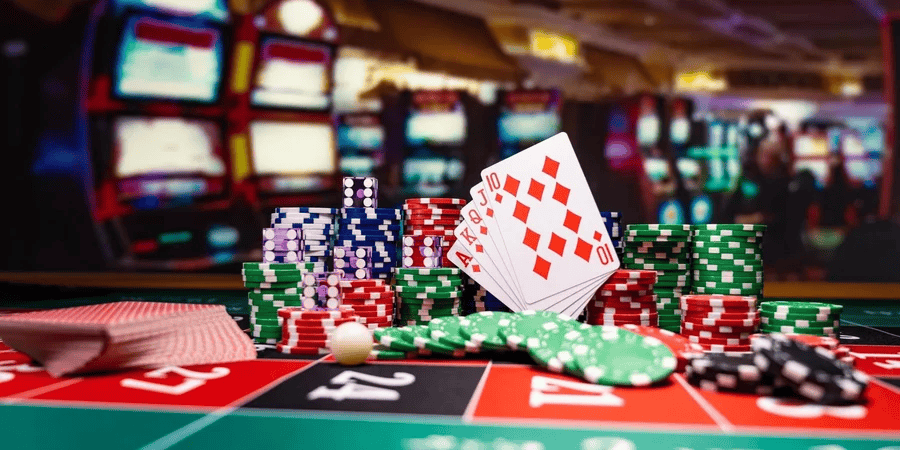
Watch for Gambling-Like Behaviour in Trading
If trading is causing debt, secrecy, repeated attempts to win back losses, sleep disruption or an inability to stop, it deserves the same seriousness as other harmful financial behaviours. Consider reducing access to leverage, pausing the account, separating essential money and speaking with a qualified financial or mental-health professional. The question is not only whether trading technically counts as gambling; it is whether the behaviour is producing harm and loss of control.
Taxes, transaction costs and platform incentives can also affect the comparison. A trading strategy that looks profitable before fees may not remain so after spreads, commissions, financing costs and taxes. Gambling products also embed costs through the house edge, margin or fee structure. Looking at net outcomes rather than headline wins makes both activities easier to evaluate rationally.
Conclusion
So, is trading gambling? Some forms of trading and gambling differ substantially in economic purpose, ownership and expected return, while highly speculative, leveraged and impulsive trading can resemble gambling in behaviour and risk. The more useful question is whether the activity has a clear process, realistic risk controls and a role in a broader financial plan—or whether it is being used to chase excitement or recover losses.